When was the last time your team spotted a competitor move before your customers did?
Knowing Your Industry With AI
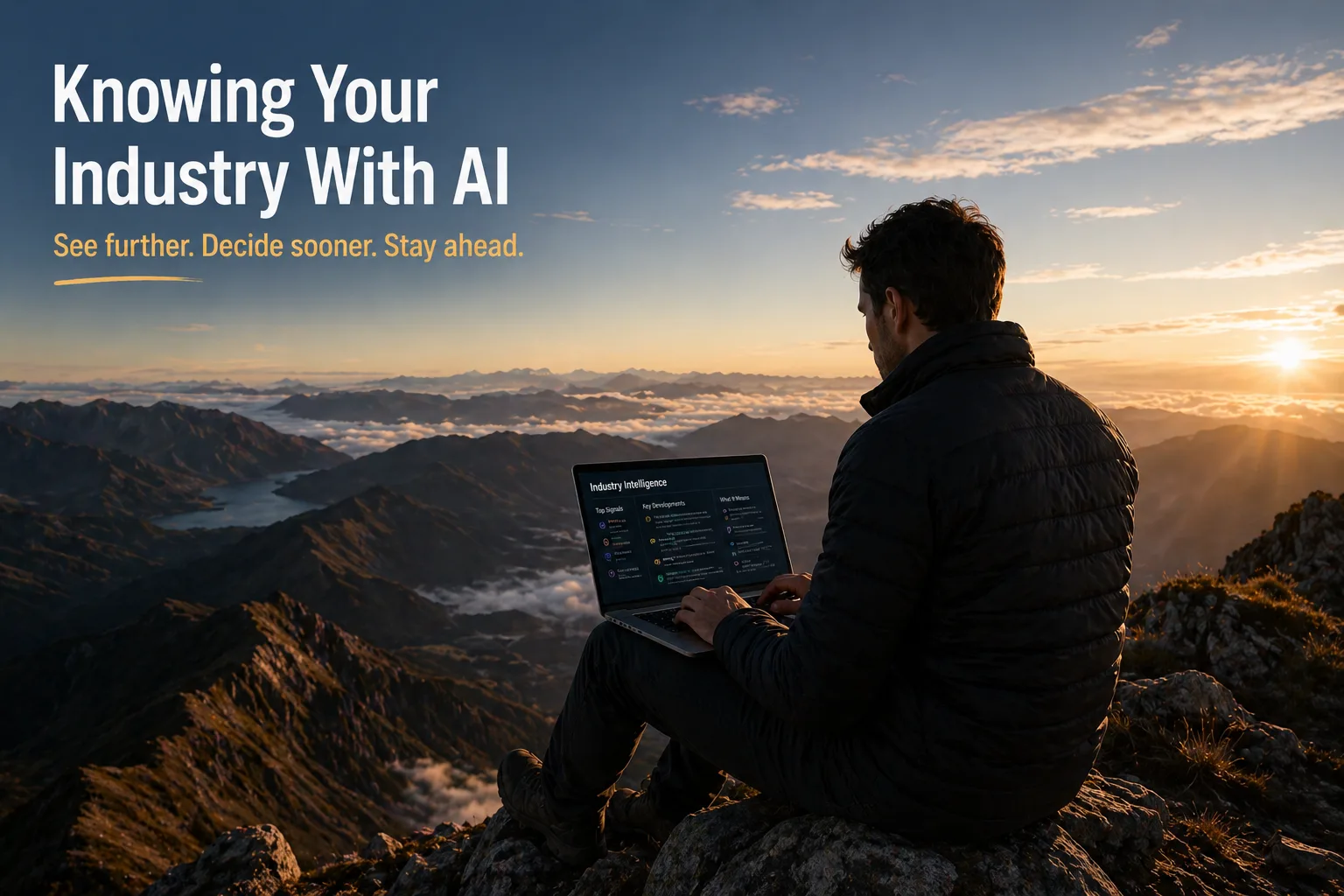
Knowing what's moving in your industry is one of those things every business agrees matters and almost nobody does consistently. The hour a week you'd need to read the right sources, spot the right signals, and connect them back to what your team should care about, gets eaten by delivery, customer work, and whatever's on fire that morning.
AI can take that hour off your plate. Done well, it can watch your competitors, your market, regulation, innovation, and the events worth knowing about, and report back to your team weekly with what matters and what doesn't. Done badly, it produces a digest nobody reads.
The difference between the two is mostly three components. We've been building horizon-scanning systems for clients, and these are the three that decide whether the thing earns its place or quietly gets switched off. They're worth knowing about whether you're commissioning one or trying to figure out why the one you've already got isn't quite landing.
Key Takeaways
- The hour a week to track your industry properly almost never happens. AI can do it, but only if it's designed for the job rather than dropped in as a keyword scanner.
- Brief the AI on intent each quarter, not just keywords. Five minutes of context turns noise into relevance.
- Stateful matters. A system that remembers last month makes connections no human team would draw alone.
- One report for everyone is how engagement dies. Tailor by role; same scan, framed for what each reader will actually do with it.
- The test of whether it works is whether people notice when it goes down. Get the three components right and they will.
You brief it on what matters this quarter
The first piece is how the system knows what counts as relevant.
The naive version is keyword matching. You give the AI a list of search terms, it goes off and finds things that mention those terms, you get a digest. It produces output. The output is mostly noise, because keywords don't capture what actually matters this quarter to your business.
The version that works is briefing the AI on intent. Not "find articles about competitor X" but "we're paying attention to competitor X this quarter because we're considering a counter-launch in their space, so anything that signals their pace, their hiring, their pricing, or their roadmap is worth surfacing."
That brief gives the AI enough context to judge whether something is genuinely relevant, not just whether it matches a string. It's how your team's collective intelligence enters the system. They know what matters. The AI doesn't. The brief is how they teach it, every cycle, what to pay attention to.
Five minutes of briefing per week is the difference between a digest your team reads and a digest they delete unopened. Skip it, and you're delegating relevance judgement to keyword matching, which has been failing at this job since the early 2000s.
It remembers what it surfaced last month
The second piece is what the system remembers across cycles.
Most automated tools are stateless. They run, they produce output, they forget what they did, they run again. That's fine for narrow tasks. It misses most of the value when what you actually want is to see the patterns in your industry over time.
A good industry-scanning AI remembers what it surfaced last month. So when something new comes up that's connected to an older signal, it makes the connection for you. A competitor hired a specific executive six weeks ago. This week they announced a product shift. Those two things are connected. Nobody on your team is going to remember the hire well enough to draw the line. The AI does, and shows you both with the connection laid out.
This is the part that feels like having someone whose only job is to watch the industry. Knowledge that compounds. The first week of running it produces single-point output. The fourth week starts producing patterns. The fourth month produces the kind of connections that look obvious in hindsight but that no human team would have made on their own.
If you're evaluating an industry intelligence tool, this is the question to ask. Does it remember what it told you last month, or is each cycle a fresh start? Fresh starts get expensive fast.
Each person gets the version they'll actually read
The third piece is what your team actually sees when the digest lands.
The mistake is one report for everyone. Same content, same framing, same length. Your product lead, your commercial lead, your founder, your head of operations. One inbox item, sent four times.
Within a few weeks, most of those recipients have stopped engaging. Not because the content is wrong, but because the framing isn't theirs. The product lead is reading regulation paragraphs they don't need. The commercial lead is reading technical signals they can't act on. The founder is reading detail when they need synthesis.
Tailoring fixes this. The same scan, framed differently per recipient. The product lead sees innovation and competitor angles in product-relevant detail. The commercial lead sees regulation, events, and market shifts in language that maps to revenue. The founder sees a strategic summary with the items that need a leadership response flagged at the top.
This isn't filtering. Filtering means hiding things. Tailoring means presenting the same things differently. Each person sees most of what the system surfaced, just framed for what they'll do with it.
The cost is a small extra step in the pipeline. The benefit is the digest actually getting read, which is the only metric that matters.
What this gives a business
Pulled together, these three components turn AI into something that genuinely helps a team stay ahead of their industry.
Your competitors' moves arrive with lead time, not as news. Regulatory shifts you should be responding to early get flagged early. Market changes worth pricing into the next quarter's plan land in time to actually shape it. Customer-facing teams stop being caught out by industry developments their customers already know about.
This used to require a research function or a senior person whose job was partly to watch the market. Most small and mid-sized businesses can't justify either, and so the work simply didn't get done. Now it can run as a workflow that costs a fraction of either, with output a small team's research function would struggle to match.
The three components matter because without them the workflow doesn't land. With them, it becomes the kind of thing teams notice when it goes down for a week. That's the test of whether something is genuinely useful. People miss it when it's gone.
A note on building one
If you're commissioning a system like this, three questions are worth answering before anything else.
How does it know what matters to your business this quarter, beyond keyword matching?
How does it remember what it told you last week, last month, last quarter?
How does it tailor its output to each person reading it, not just the team?
Get those three right and the rest of the system is engineering. Get them wrong and no amount of clever scanning will save you.

Doriel Alie
Doriel is the founder of Operational AI Systems, an AI consultancy and software development agency in Milton Keynes. More about Doriel.
Trending
Related post
Expand your knowledge with these hand-picked posts.
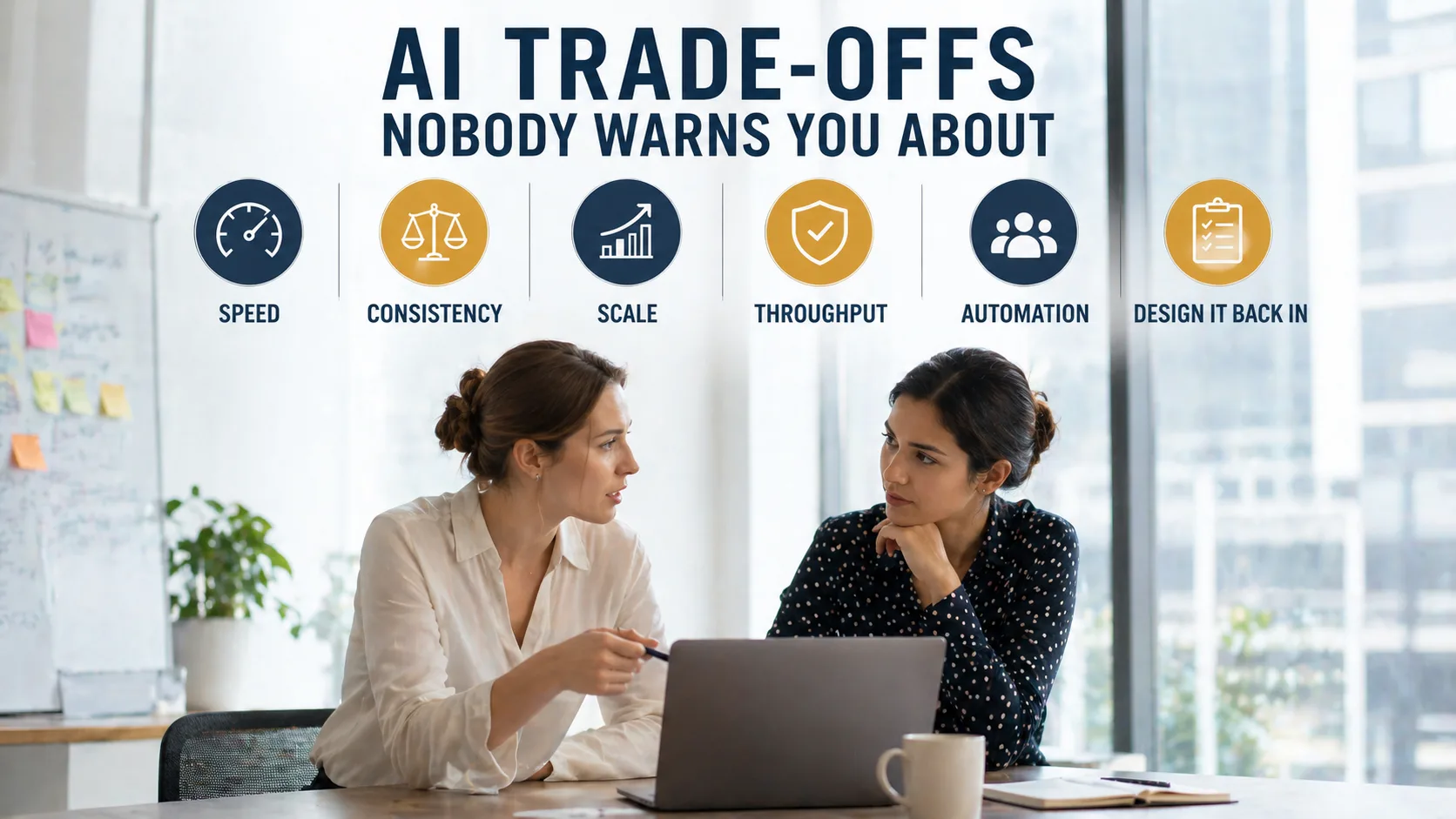
AI Trade-offs Nobody Warns You About
What manual processes catch that nobody writes down, what AI removes, and how to design those checks back in before quality slips. The honest audit before you automate.

AI Architecture That Reaches Production
Sync vs async, queues, retry logic, state handling, and the architectural choices that decide whether your AI scales or collapses under real load.
System Status