Why does saving an hour with AI somehow leave you with less time, not more?
The AI Productivity Trap
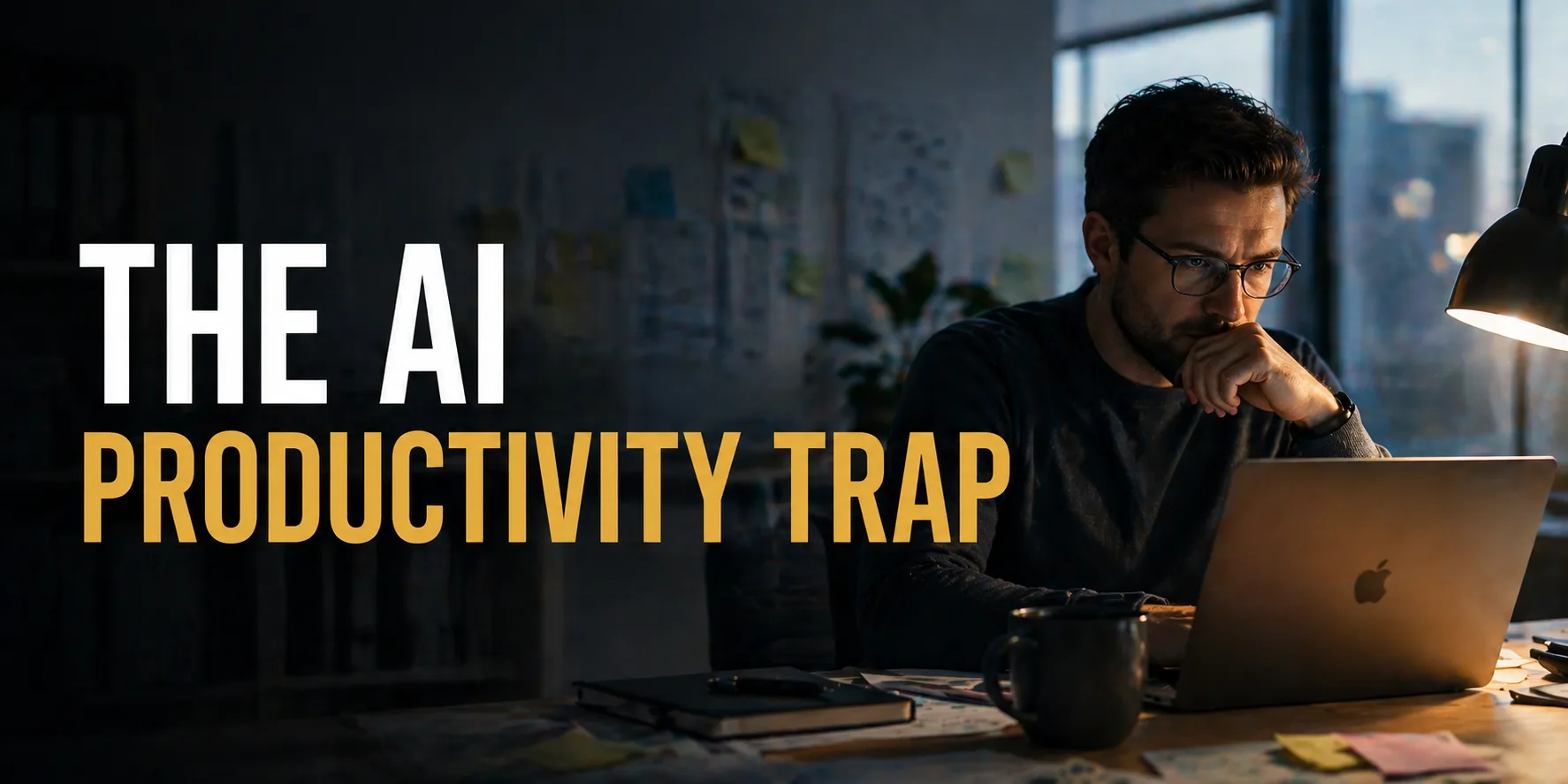
Most writing about AI productivity is celebratory. The wins are real, and we don't want to take that away from anyone. But there's a part of this story almost nobody is telling honestly, and the people using AI hardest are the ones who need to hear it most.
AI is supposed to give you your time back. It doesn't. Not because it fails. Because it works so well that it pulls you deeper in. You save an hour and you spend it on another build, another experiment, another version of an idea you couldn't have shipped a year ago. The hour is gone. Another hour is already booked.
This is the AI productivity trap. It's mostly a healthy addiction. But only if you notice it.
Key Takeaways
- The wins are real. The learning curve is steep, the speed is intoxicating, and the agency feels earned.
- The time you save with AI rarely lands where you imagined. It quietly gets reinvested in more AI work.
- The loop between effort and output is so tight it bypasses the part of your brain that protects you from overwork.
- You can be happier from the work and worse off in your life at the same time. Both are true. That's what makes the trap hard to spot.
- The discipline isn't using AI less. It's deciding where the saved hour is going before AI hands it to you, and defending that decision.
The learning curve is vertical
Anyone using AI at thirty or fifty per cent of its capacity is learning deep, valuable, unexpected things. Things that let you create, or be part of creation, in ways that weren't possible a year ago. The fascination is real and it's earned.
You cannot imagine what you'll be digging into in six months, because the ground keeps shifting under you and you shift with it. You sit down to learn one thing and four hours later you've taught yourself something adjacent you didn't know existed when you started. You finish the day knowing more than you knew when you woke up, in a way that has not been true in any previous era of work.
It's exhilarating. There's a reason people keep going back.
The speed is the hook
You go from concept to production, with paying customers, in a timeframe that used to be unthinkable. You ship things of real value in weeks, sometimes days. You build an idea, watch someone use it, get feedback, ship a better version, all inside the kind of timescale that used to be a planning meeting in a corporate environment.
That feeling, the feeling of actually making something that matters, is the hook. It's not a small hook. It's the cleanest hit of agency many people have ever felt at work.
When something works that well, you do more of it. That's not a flaw in your wiring. It's how humans respond to anything genuinely good.
The time isn't going where you thought
Here's the part the productivity blogs leave out.
The time you save doesn't go to your family. It doesn't go to the long walk you keep promising yourself. It doesn't go to the life admin you've been putting off for months. You go straight into the next task, because you feel like you've been handed a free hour to spend on something you're passionate about, and your body is already moving.
Almost every month something new lands that knocks your head off. A new model. A new framework. A new capability you couldn't have used last quarter. You rearrange yourself to optimise for it, because you can see what it unlocks, and the cost of not adapting feels enormous compared to the cost of staying up late to learn it.
You're not lazy. You're not addicted in the bad sense. You are paying attention to something genuinely changing. The trouble is that the time you bought back with AI quietly disappeared into more AI, and you didn't notice the trade.
Creation as baby
Somewhere along the way the work became your baby.
Not in a healthy "I'm proud of this" way, although that's there too. In a magnetic, weird, unspoken way. You think about it in the shower. You wake up with a feature in mind. You reach for it before coffee. You'd rather work on it than eat dinner.
You end up working twenty times harder than you ever imagined, trying to keep up with the AI and squeeze every drop out of it. Because every drop produces something visible. Because the loop between effort and output is so tight that it bypasses the part of your brain that protects you from overwork.
The only thing you were supposed to get back, time, is not happening. You're not even close. You're getting worse at it.
You're happier. Your life isn't.
This is the line that makes this piece honest.
You are, in many ways, happier than you've been in years. The work is interesting. You're learning. You're making things. You're competent at something that didn't exist eighteen months ago. There's no faking that.
Your family hasn't seen as much of you. Your friends have noticed. You haven't been to the gym in a while. The house is messier than you'd like. You skipped the thing your kid wanted to show you because you were finishing a build. You told yourself it would only take an hour. It took four.
Both of those things are true at once. The happiness is real, and so is the cost. Pretending otherwise is what makes this trap so hard to spot, let alone escape.
How to think about it
We're not going to tell anyone to use AI less. The wins are real, and the people putting their hours into this now will be in a position later that those who didn't won't easily catch up to.
What we will say is this. The time AI gives back is real, and it disappears the moment you don't claim it. If the only place that hour can land is "more AI work," there is no time being saved. There is just work being moved around.
Pick the things that hour is actually for, before AI gives it to you. Family time. A walk. A conversation that isn't about a build. The boring admin that's been waiting. Sleep, if you've forgotten what that was. Decide where it's going, then defend that decision when AI hands you the hour and your body wants to spend it on the next thing.
The discipline isn't using AI less. It's noticing when the saved time is being quietly reinvested in more saved time, with no actual life upgrade happening anywhere in the chain.
A note for owners
If you're running a small business or a team, this applies double. The same trap pulling you in is pulling your best people in too. They're learning fast. They're shipping fast. They're also working twenty times harder than they used to, telling themselves the same story you're telling yourself.
Productivity that nobody is enjoying, in a life nobody is building outside of work, isn't productivity. It's a different kind of treadmill with better tools.
The healthy version of this is real. We see it. People building things they love, learning skills they couldn't have predicted, shipping work that genuinely matters to them. It's a great time to be alive in this kind of work, if you keep your hands on the wheel.
The trap is mistaking a faster treadmill for actually getting somewhere. Time back means nothing if it doesn't go anywhere.

Doriel Alie
Doriel is the founder of Operational AI Systems, an AI consultancy and software development agency in Milton Keynes. More about Doriel.
Trending
Related post
Expand your knowledge with these hand-picked posts.

AI Trade-offs Nobody Warns You About
What manual processes catch that nobody writes down, what AI removes, and how to design those checks back in before quality slips. The honest audit before you automate.
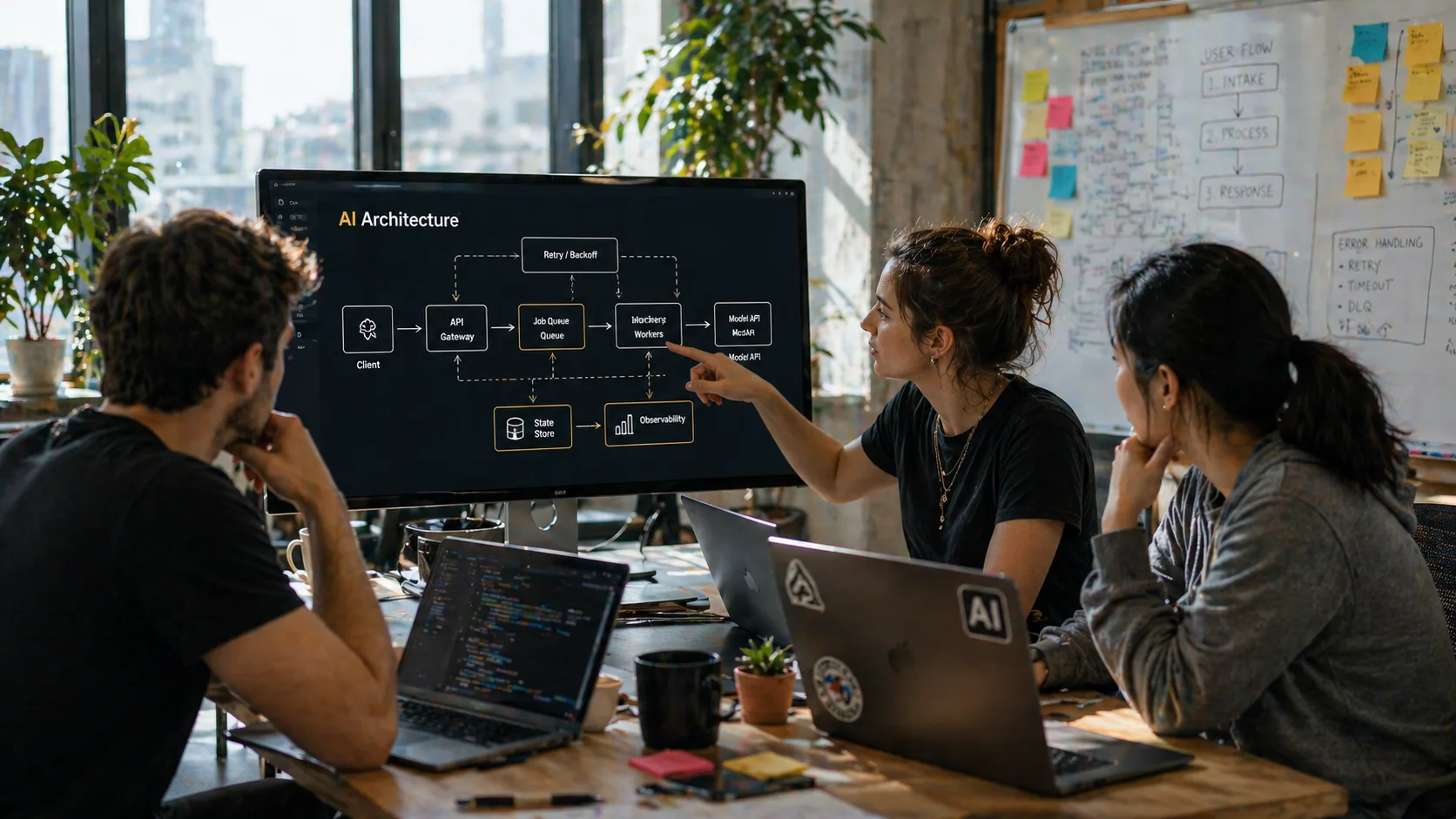
AI Architecture That Reaches Production
Sync vs async, queues, retry logic, state handling, and the architectural choices that decide whether your AI scales or collapses under real load.
System Status